

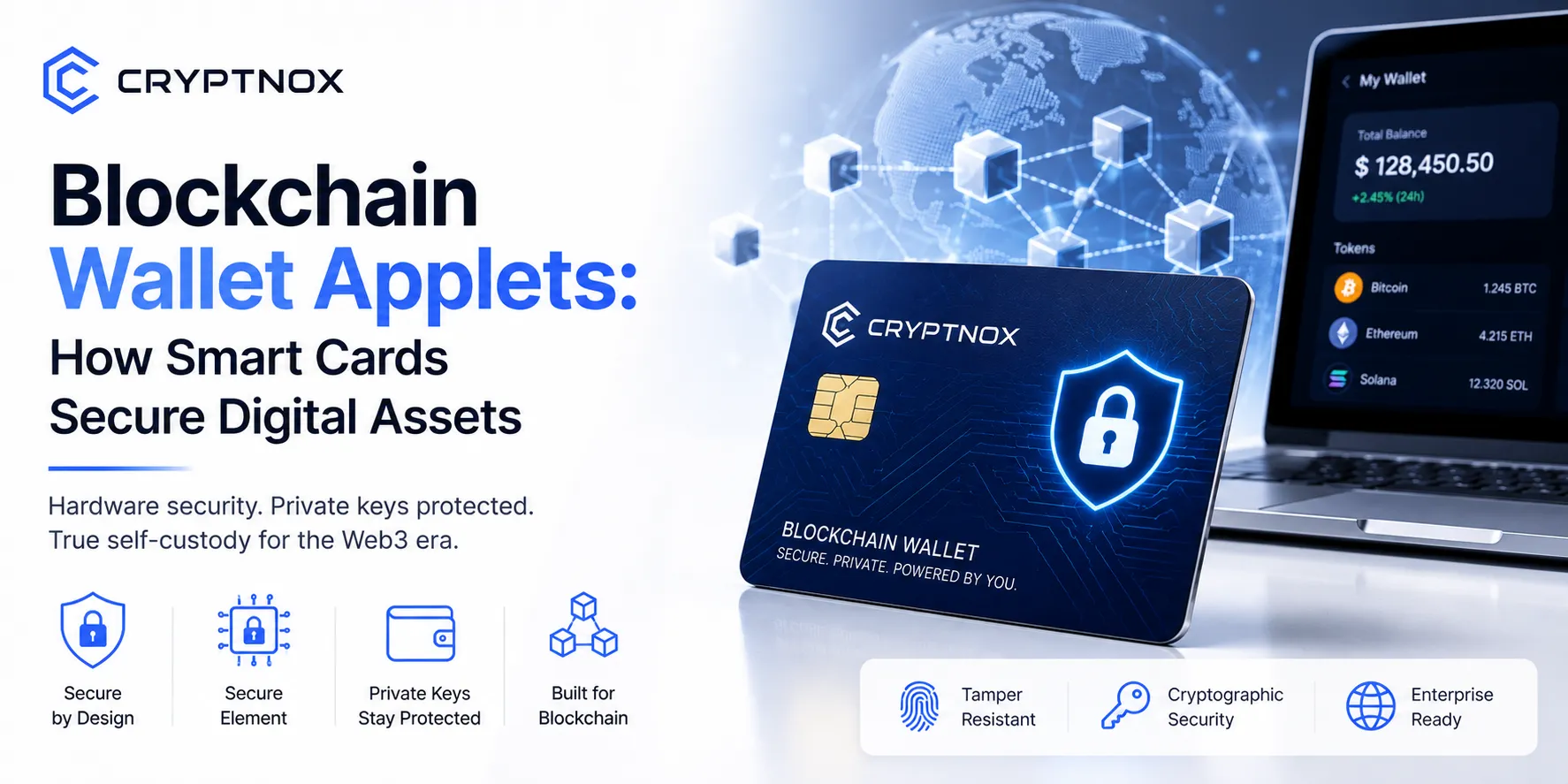
The rapid growth of blockchain technology has transformed how individuals and organizations manage digital assets. However, as cryptocurrencies become more valuable and widely adopted, protecting private keys has become one of the industry’s greatest security challenges. Software wallets offer convenience, but they remain exposed to malware, phishing, and device compromise. This is why Blockchain wallet applets have emerged as a secure alternative. Running inside tamper-resistant smart cards equipped with secure elements, blockchain wallet applets execute sensitive cryptographic operations without exposing private keys. For enterprises, fintech companies, and Web3 solution providers, they provide a trusted foundation for building secure, scalable, and future-ready digital asset solutions.
What Are Blockchain Wallet Applets?
Blockchain wallet applets are specialized software applications installed on secure smart cards or secure elements. Unlike traditional software wallets that store private keys on computers or smartphones, these applets execute cryptographic functions within dedicated hardware designed to resist physical and digital attacks.
A wallet applet is responsible for:
-
Securely generating private keys.
-
Storing cryptographic credentials.
-
Signing blockchain transactions.
-
Managing wallet authentication.
-
Protecting sensitive operations from external threats.
Because the applet runs entirely within secure hardware, private keys never leave the secure environment, significantly reducing the risk of compromise.
Why Smart Cards Offer Stronger Security
Smart cards are built with tamper-resistant secure elements specifically designed to protect sensitive cryptographic information.
Unlike general-purpose computing devices, secure elements isolate private keys from the operating system, preventing malware or unauthorized applications from accessing them.
A properly designed Blockchain wallet applets solution offers multiple layers of protection, including:
-
Hardware-based key isolation.
-
Cryptographic transaction signing.
-
Resistance to physical tampering.
-
Secure authentication.
-
Controlled execution of blockchain operations.
This architecture makes smart cards an ideal platform for protecting digital assets.
How Blockchain Wallet Applets Work
When a blockchain wallet applet is installed on a smart card, it becomes the secure execution environment for blockchain operations.
Instead of exporting private keys to external software, the applet performs sensitive functions internally.
The typical workflow includes:
-
A transaction request is sent to the smart card.
-
The applet verifies the request.
-
The secure element performs cryptographic signing.
-
Only the signed transaction is returned.
-
The private key remains permanently protected inside the secure hardware.
This process significantly reduces exposure to cyber threats compared to software-only wallets.
The Role of Secure Elements
A secure element is the hardware component that provides the foundation for trusted execution.
It is specifically designed to:
-
Protect cryptographic keys.
-
Detect physical tampering.
-
Execute secure cryptographic algorithms.
-
Prevent unauthorized data extraction.
-
Support secure authentication.
A secure element enables blockchain wallet applets to deliver enterprise-grade security that software wallets cannot easily replicate.
For organizations managing digital assets at scale, secure elements provide an essential layer of protection against both physical and remote attacks.
Benefits for Blockchain Wallet Development
Modern blockchain wallet development increasingly focuses on combining usability with robust security.
Integrating wallet applets into smart cards provides several advantages:
-
Strong hardware-backed key protection.
-
Reduced attack surface.
-
Support for self-custody solutions.
-
Better resistance to phishing attacks.
-
Secure transaction authorization.
-
Long-term durability.
-
Improved regulatory confidence for enterprise deployments.
These capabilities make smart card technology attractive for fintech companies, digital asset custodians, financial institutions, and enterprise blockchain platforms.
Enterprise Applications
Blockchain wallet applets are no longer limited to individual cryptocurrency users.
Organizations now deploy them across a wide range of enterprise use cases, including:
-
Institutional digital asset custody.
-
Corporate treasury management.
-
Employee authentication.
-
Enterprise blockchain applications.
-
Tokenized asset management.
-
Secure digital identity.
-
Payment infrastructure.
Their ability to securely manage cryptographic operations makes them suitable for industries where protecting sensitive digital assets is a top priority.
Why Crypto Smart Cards Are Gaining Adoption
Traditional software wallets depend heavily on the security of the host device.
By contrast, crypto smart cards isolate sensitive operations within dedicated hardware, making attacks significantly more difficult.
Organizations adopting crypto smart cards benefit from:
-
Hardware-backed self-custody.
-
Portable authentication.
-
Secure key management.
-
Better user trust.
-
Improved enterprise scalability.
As Web3 ecosystems continue to evolve, hardware-based wallet solutions are becoming increasingly important for secure blockchain adoption.
Best Practices for Secure Wallet Solutions
Organizations developing blockchain wallet solutions should follow several security best practices:
-
Use certified secure elements.
-
Keep private keys inside secure hardware.
-
Implement strong authentication.
-
Protect wallet personalization during manufacturing.
-
Regularly update security policies.
-
Conduct independent security testing.
-
Build wallet applications using proven secure development practices.
Combining these measures with hardware-backed wallet applets creates a resilient digital asset security framework.
The Future of Blockchain Wallet Applets
The demand for secure blockchain infrastructure continues to grow as enterprises adopt tokenization, digital identity, decentralized finance, and institutional cryptocurrency services.
Hardware-backed wallet applets are expected to become a core component of next-generation blockchain platforms because they provide stronger protection than software-only alternatives.
Ongoing advancements in secure elements, smart card technology, and enterprise wallet architectures will continue improving security while supporting scalable blockchain adoption across financial services, government, and enterprise applications.
Conclusion
Protecting digital assets requires more than strong encryption—it requires secure execution environments that safeguard private keys throughout their lifecycle. Blockchain wallet applets deliver this protection by combining tamper-resistant smart card technology with secure cryptographic processing inside dedicated hardware. For organizations investing in blockchain wallet development, secure elements and crypto smart cards provide a scalable, enterprise-ready foundation for self-custody, digital identity, and next-generation Web3 applications. As blockchain adoption accelerates, hardware-backed wallet applets will play a central role in securing the future of digital assets.
