

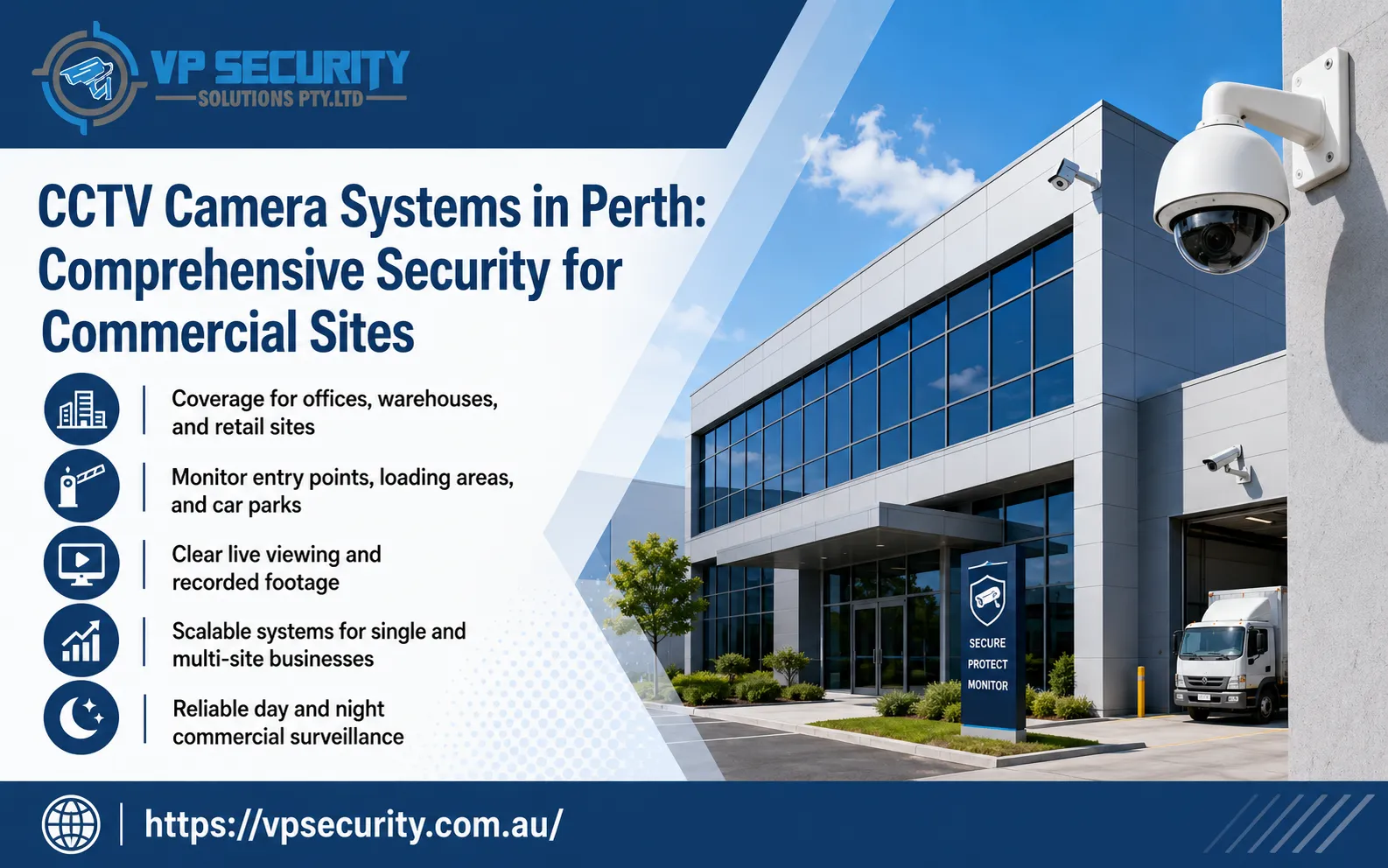
Commercial sites often require more than a few basic cameras. Large premises, multiple access points, stock areas, machinery, vehicles, loading zones, staff movement, and after-hours risks all create a more complex security environment. A well-designed cctv security camera system can help protect the entire site by providing clear visibility, reliable recording, and practical oversight where it matters most.
Whether the site is a warehouse, industrial property, storage facility, showroom, construction office, distribution centre, or multi-building commercial premises, security should be planned around the full layout. Comprehensive protection means thinking about entrances, perimeters, internal zones, blind spots, parking areas, and operational areas together, not as separate pieces.
Why Commercial Sites Need Comprehensive Planning
Commercial sites usually have more moving parts than smaller properties. Deliveries may occur early in the morning. Contractors may come and go. Staff may work across different zones. Vehicles may enter through gates or loading areas. Stock and equipment may be stored in places that are not always visible from the main office.
Because of this complexity, a simple camera layout may not provide enough protection. Comprehensive planning helps ensure that important areas are visible and that the system records footage that can actually be used. The goal is to reduce exposure and improve awareness across the whole premises.
Understanding the Scale of the Site
The size and layout of the premises should guide the system design. A large warehouse may need cameras along internal aisles, external walls, loading docks, dispatch areas, and entry points. An industrial yard may need long-range views, vehicle monitoring, and strong night performance. A commercial building may need cameras at reception, lifts, corridors, car parks, and service entrances.
When planning security cameras for a commercial site, it is important to walk through the property and identify how people, goods, and vehicles move. This movement pattern shows where cameras will be most useful.
Key Areas to Cover
Every commercial site is different, but many require coverage across several important zones. These may include:
-
Perimeter fences, gates, and boundary areas
-
Main entrances, side entrances, and rear doors
-
Loading docks and delivery points
-
Stock rooms, storage racks, and equipment zones
-
Car parks, driveways, and vehicle entry points
-
Reception areas, offices, and customer spaces
-
Internal corridors, walkways, and production areas
-
Waste areas, service lanes, and hidden corners
A comprehensive system should reduce blind spots and provide useful visibility across the areas that present the greatest risk.
Designing a System That Works Together
A commercial CCTV system should operate as one connected solution. Cameras, recorders, storage, network connections, remote access, and user permissions should all work together smoothly. Professional planning of cctv camera systems perth helps ensure the system is not only installed correctly but also practical to manage.
For larger sites, camera naming and layout organisation are important. If an incident occurs, managers should be able to quickly identify the correct camera and review the right footage. A disorganised system can waste valuable time, especially when multiple cameras are involved.
Footage Quality and Camera Selection
Clear footage is essential. A camera system should capture enough detail to identify people, vehicles, actions, and events. Different parts of a commercial site may require different camera specifications. For example, entry points may need higher clarity for facial detail, while large open yards may need wider coverage or cameras with longer viewing distance.
Lighting also matters. Outdoor areas, loading zones, and car parks may have changing light conditions during the day and night. Cameras should be chosen to suit these conditions. A professional installer can recommend equipment that performs reliably in the actual environment, not just on paper.
Recording, Storage, and Retention
Commercial sites often generate large amounts of footage. Multiple cameras recording throughout the day and night can quickly use storage capacity. That is why recording settings, hard drive size, retention period, and footage quality should be planned carefully.
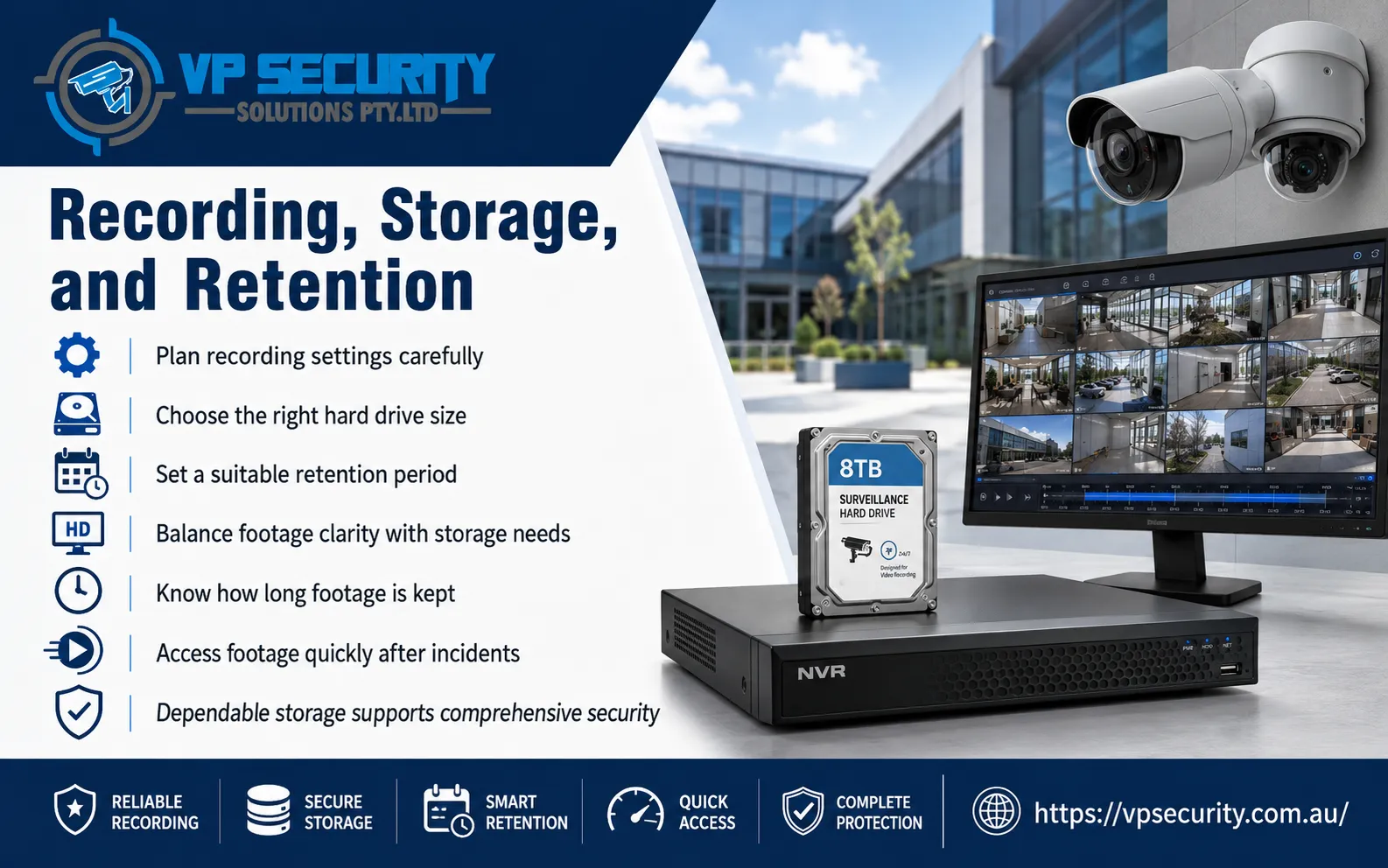
A good system should balance clarity with storage needs. Business owners should understand how long footage will be kept and how it can be accessed if an incident is reported days or weeks later. Dependable storage is a major part of comprehensive security.
Remote Monitoring for Owners and Managers
Remote access is especially valuable for commercial sites. Managers may not always be on-site, and some businesses operate across multiple locations. Remote monitoring allows authorised users to check live camera views, review recorded footage, and respond more quickly when something needs attention.
This can help with security and operations. For example, a manager can check whether a gate is closed, whether a delivery has arrived, whether staff are safe in a remote area, or whether after-hours movement needs investigation. Remote access gives business owners more control without requiring them to be physically present.
Reliability Is Critical
Commercial premises may contain expensive stock, tools, vehicles, machinery, documents, and business-critical equipment. A camera system protecting these assets needs to work consistently. Unreliable recording, poor network connections, weak camera placement, or equipment failures can leave gaps at the worst possible time.
Reliability depends on good equipment, correct installation, proper configuration, and ongoing support. It is also important to review the system periodically to ensure cameras are still positioned correctly and recording as expected. Business sites can change over time, and the security setup should adapt with them.
Scalable Systems for Growing Businesses
Commercial sites are not always static. A warehouse may expand its stock areas. A business may add new gates, offices, or parking zones. A site may introduce new equipment or change the way goods move through the premises. A scalable CCTV design allows the system to grow or adjust as these needs change.
Planning for future expansion can save money and reduce disruption later. It is better to design the system with long-term needs in mind than to install a limited setup that becomes unsuitable as the business grows.
Why Choose VP Security
VP Security designs and installs commercial CCTV systems for businesses that need reliable, practical protection. We assess the site layout, identify important zones, recommend suitable security cameras perth, and install systems that support clear monitoring and easy footage access. Our goal is to protect the whole premises, not just a few obvious areas.
We understand the needs of warehouses, commercial buildings, industrial sites, retail spaces, and larger business properties. With professional installation, remote access setup, reliable recording, and ongoing support, we help Perth businesses build camera systems that are ready for real commercial conditions.
Final Thoughts
Comprehensive CCTV security is about more than camera numbers. It is about understanding the site, planning coverage carefully, selecting suitable equipment, ensuring reliable recording, and making the system easy to use. For commercial sites, this level of planning is essential because the risks are often greater and the spaces are more complex.
A well-designed camera system gives business owners better visibility, stronger protection, and greater confidence. When your whole premises is covered properly, you can manage risk more effectively and respond to incidents with clearer information.
